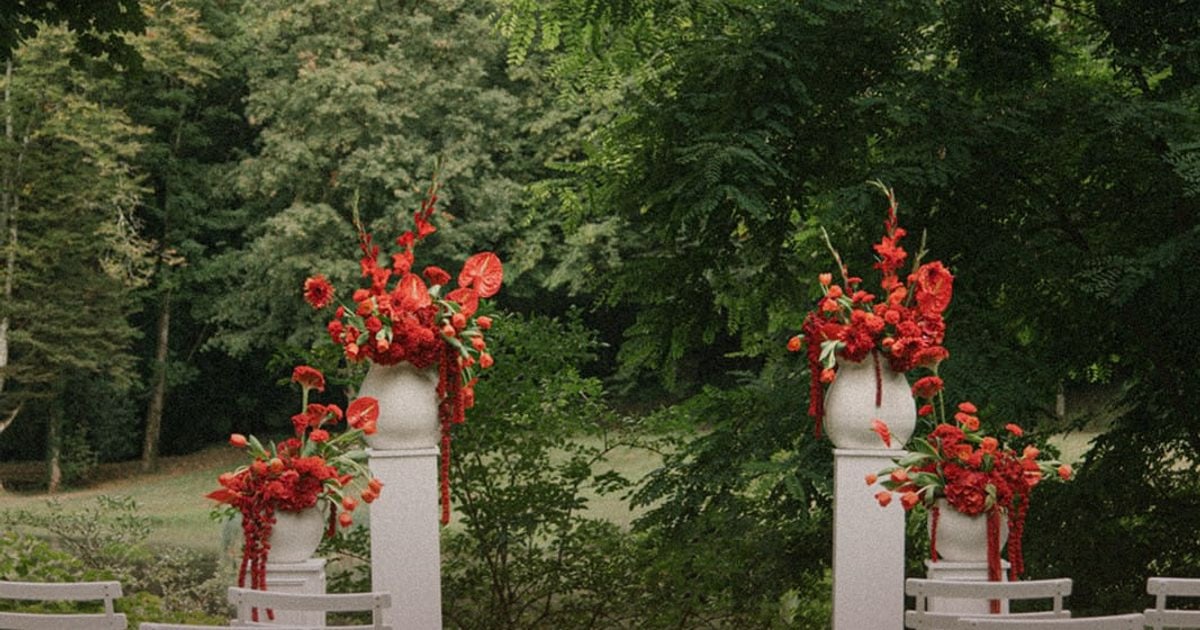
A humanist ceremony is the part of the wedding you write entirely yourselves: the words, the voices, the ritual and the setting. At Château de la Huberdière, near Amboise, it takes place in the fourteen hectares of grounds or on the terrace, and it is often the half hour guests remember best.
This guide answers the questions couples ask us before preparing one: its legal standing, the order of service, who can officiate, which rituals hold up outdoors, what it costs and what to do if it rains.
What is a humanist wedding ceremony?
A humanist wedding ceremony is a symbolic, non-religious celebration of a couple's commitment, with no legal value whatsoever in France. It complements the civil marriage; it does not replace it.
The French Civil Code is unambiguous, as service-public.fr, the official government portal, points out: only a marriage performed at the town hall by a registrar legally unites two people. The town hall therefore comes first, on the morning itself or a few days earlier. The one in Nazelles-Négron is a few minutes from the château, but nothing requires you to marry in the commune where you hold the reception.
Whatever the law leaves open, you decide alone: the setting, the length, the readings, the order of the speeches. That is the whole difference from a twenty-minute civil ceremony read out by a deputy mayor who has never met you.
What is the order of service for a humanist ceremony?
A humanist ceremony lasts between 45 minutes and an hour and almost always follows the same six-part outline, which you then shape around your own story. Here is the order we see working best in the grounds:
- Welcoming guests (15 minutes before): seating, soft music, programmes or fans handed out at the start of the aisle.
- The processional: witnesses, flower girls and page boys, then each of the couple, escorted or not.
- The celebrant's opening words: introducing the couple and setting the tone.
- Readings and speeches: three or four loved ones, three minutes each, no more.
- The ritual, then the exchange of vows and rings: the heart of the ceremony.
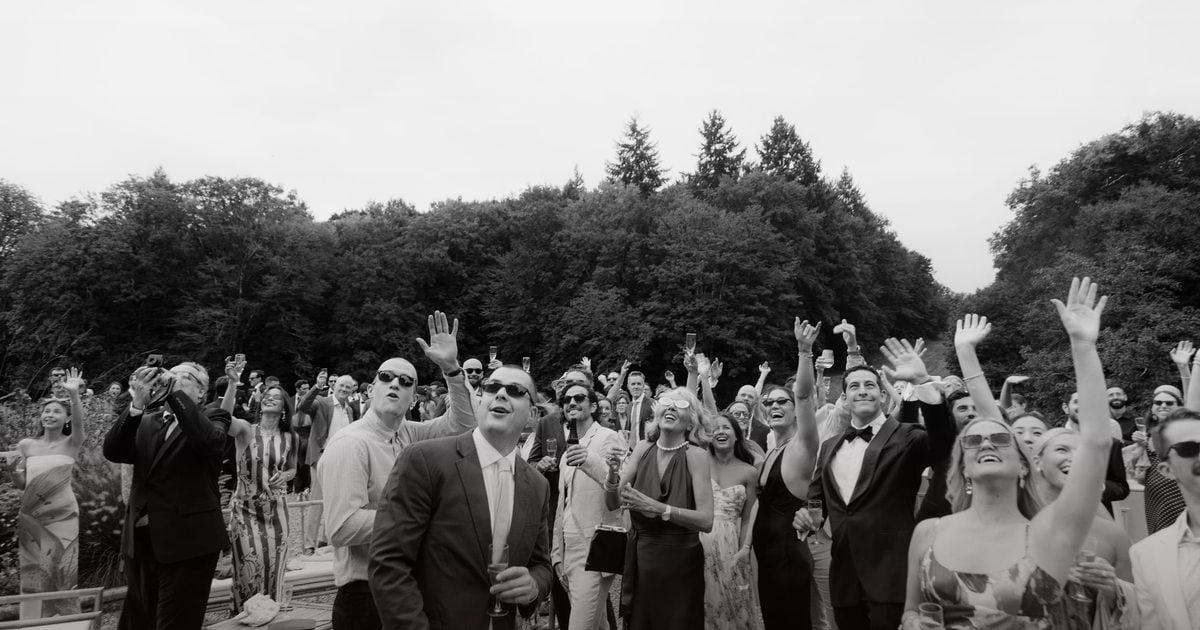
- The recessional: petals, bubbles or applause, and everyone moves on to the drinks reception.
Our most useful advice fits in one sentence: limit the number of speeches rather than their length. Six five-minute speeches make an hour, and the last one gets lost. Three well-crafted texts beat six readings improvised the night before.
Where can you hold a humanist ceremony at the château?
At la Huberdière, the humanist ceremony has two possible settings: the aisle in the grounds, beneath the century-old trees, or the gravel terrace overlooking the valley. As the estate is yours exclusively, you choose either one without sharing it with another event.
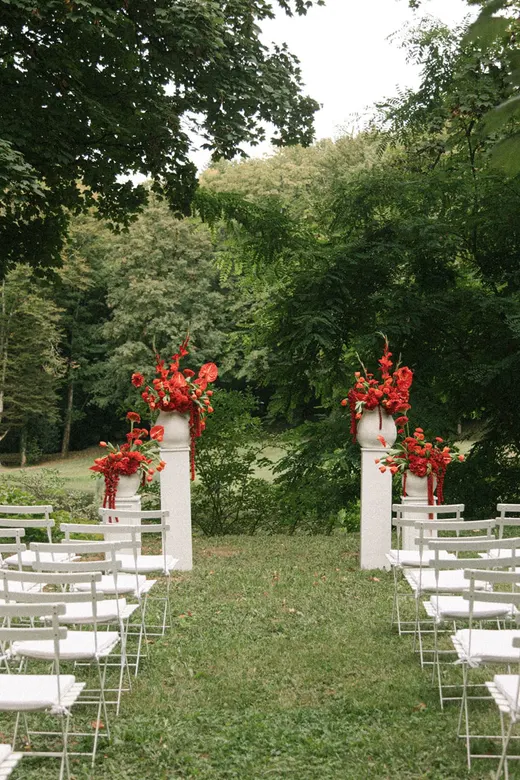
The grounds suit large gatherings of up to 150 guests and give that light filtered through the leaves that photographers love. The terrace works better for weddings of 30 to 60 guests: the balustrade and blue hydrangeas make a natural backdrop, with the celebrant standing with the grounds behind.
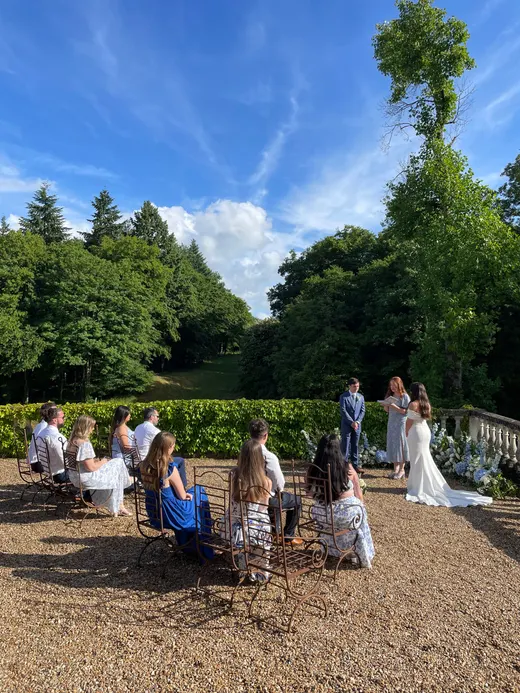
One detail matters more than people think: orientation. In the late afternoon the sun sits low, and a badly angled aisle leaves guests squinting for forty minutes. We know how the sun moves across the estate and show you the exact spot during your visit, at the planned time if possible.
What happens if it rains on the day of the humanist ceremony?
An outdoor humanist ceremony needs a fallback plan on site, settled before the big day, and it is one of the first criteria for choosing a venue. A marquee hired at the last minute costs a fortune and never arrives in time.
At the château, the great vaulted hall and the Orangery take over thirty seconds from the terrace, at no extra cost. Guests stay dry, the photographer keeps the light, and nobody gets back in a car.
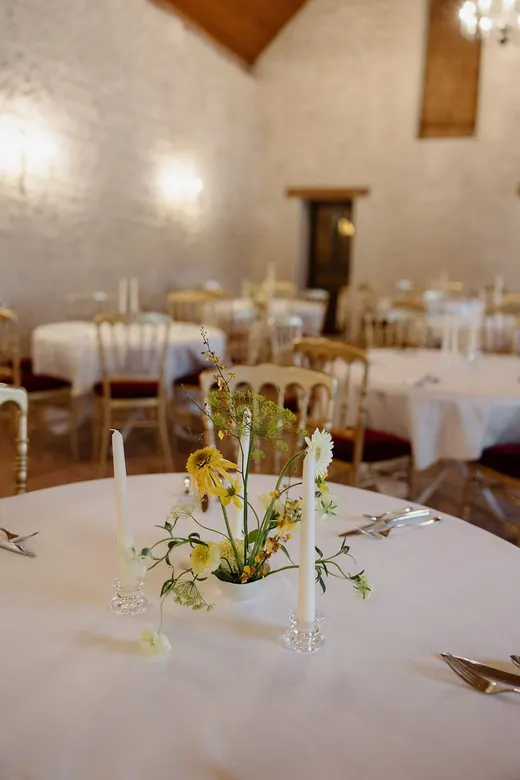
Our rule: decide the evening before, at 8 pm, based on the forecast for the following afternoon. Deciding on the morning puts everyone on edge, florist included. If the colder months appeal, our guide to a winter wedding at the château covers a ceremony held entirely indoors, by the fire.
Who can officiate a humanist ceremony?
Anyone can officiate a humanist ceremony: a professional celebrant, a close friend or a family member. No qualification or licence is required, since the ceremony has no legal value.
A professional celebrant brings structure: several meetings with the couple, writing the script, managing timing and speakers on the day. A loved one brings emotion, but also carries the whole ceremony on their shoulders, nerves included.
Our view, after many weddings on the estate: a friend who officiates does very well if they are a genuinely good speaker and have three months to prepare. Otherwise, give the structure to a professional and let your loved ones speak in the readings. You keep the emotion without the risk. Our wedding coordination package covers finding and managing suppliers, the celebrant included.
Which rituals work for an outdoor humanist ceremony?
The rituals that work outdoors are those that stand up to the wind and can be seen from the back row: the tied ribbon, the poured sand, the shared wine. The others call for more caution.
- Handfasting: the celebrant binds the couple's hands with a ribbon, sometimes brought by each family. No weather risk.
- Sand: each pours coloured sand into the same vase. Visible from afar, it stays as a keepsake.
- Wine: two wines blended in a single glass. In Touraine, the Vouvray vineyards begin at the edge of the grounds, so this ritual makes sense here.
- The sealed letter: each writes a letter to the other, sealed in a box to be opened on a wedding anniversary.
We advise against two classics outdoors. A single unity candle goes out at the slightest breath, unless it sits in a lantern. Sky lanterns are banned by prefectural order in many French departments because of the fire risk: never plan them in wooded grounds.
How much does a humanist ceremony cost?
A humanist ceremony mainly costs the fee of its celebrant, usually between €800 and €2,000 for a professional, and next to nothing if a loved one officiates. The rest depends on decoration and sound.
Here, use of the grounds and the terrace for the ceremony is included in the exclusive hire of the estate, from €4,000 to €8,000 depending on the season for a Friday to Sunday weekend, including the 21 beds in the 10 bedrooms. The item-by-item breakdown is in our guide to the cost of a Loire château wedding.
What we do not provide, we would rather say upfront: the ceremony decoration, arch and flowers included, is down to you or your florist. Round tables and reception chairs are available at €15 per person.
Which season suits a humanist ceremony in the grounds?
May to September for an outdoor ceremony with peace of mind, with demand peaking in June and September. Before and after, the grounds remain usable, but the fallback plan becomes the main plan.
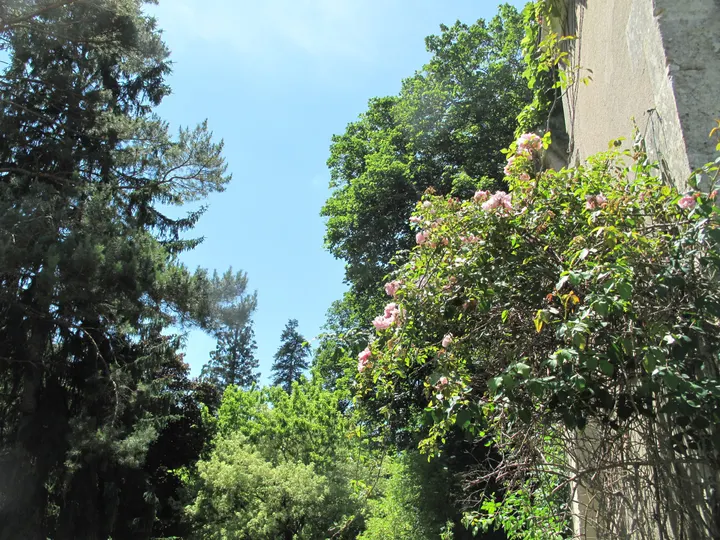
September is our favourite month for a humanist ceremony: the heat eases and the light turns golden in the late afternoon. The flip side is that Saturdays in May, June and September often go a year ahead. A Friday, or a Saturday in October, leaves far more choice.
Planning your humanist ceremony at la Huberdière
The château stands in Nazelles-Négron, 2 hrs 20 from Paris and 30 minutes from Tours, and is hired exclusively for your wedding. Your loved ones sleep on site, the ceremony takes place a few steps from the bedrooms, and the drinks reception follows on the terrace without a single journey. For the rest of the evening, our château dining page sets out what the house serves, and our article on the table d'hôtes in the Loire captures the spirit of Lodovica's cooking.
For the spaces, capacities and packages, visit our page to plan your château wedding in the Loire, and our château wedding planning guide covers the remaining questions.
Tell us your date and the number of guests: I will send you a costed proposal within 24 hours.