Planning a yoga retreat always starts with the same question: where? The venue does half the work. You need calm, space, light, a place where guests feel cut off from everyday life the moment they pass through the gate. The Château de la Huberdière, in Touraine, hosts yoga retreats and wellness courses on a fourteen-hectare estate hired on an exclusive-use basis, walled grounds included.
Here is what an organiser weighs when choosing a venue, and how the estate answers each point.
How do you choose a venue for a yoga retreat?
A yoga retreat venue rests on three conditions: a generous practice space, comfortable rooms, and silence. The rest is comfort. La Huberdière brings these three conditions together in one place, which avoids travel and keeps the group together from morning to evening.
The estate is hired entirely, with no other guests during the course: the château, its sitting rooms and its grounds are yours for the whole stay. This exclusivity changes a group's focus, no one crosses paths with a stranger between two sessions. The details on capacity and set-up are on the retreat page.
A quiet château in the heart of Touraine
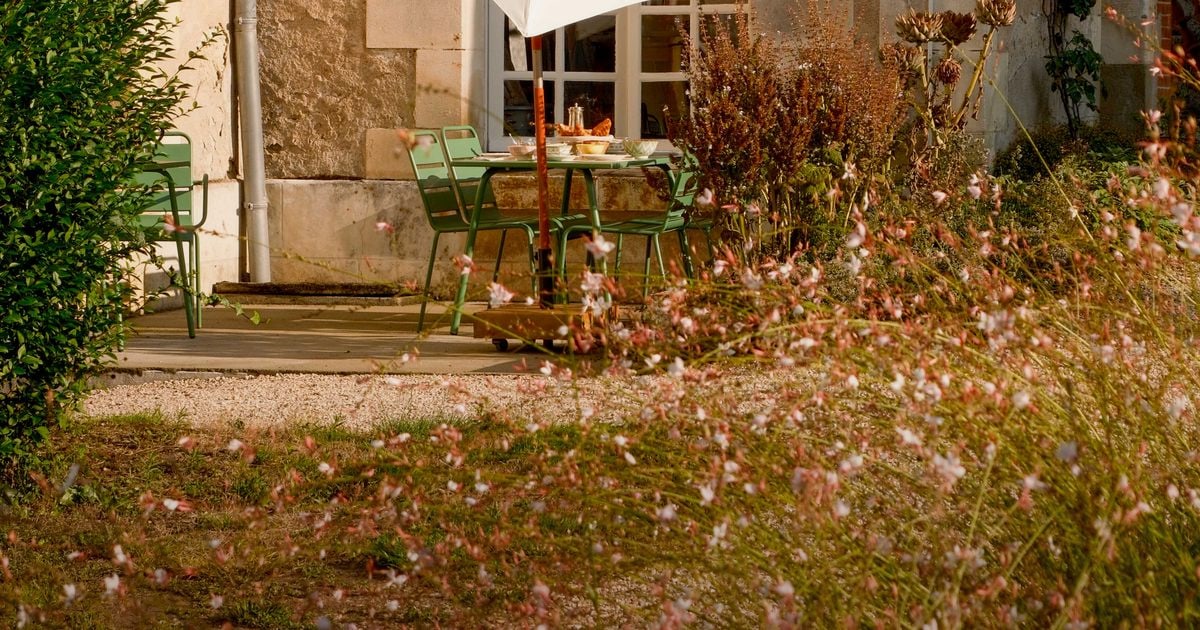
The château sits in walled grounds at Nazelles-Négron, near Amboise, away from busy roads. You hear the wind in the tall trees rather than the traffic. It is this silence that lets a meditation or a morning session take its full place.
Touraine adds its mild climate and its Loire Valley landscapes. Between two practices, guests walk in the grounds, read on the lawn, or head to the nearby banks of the Loire. This natural setting is part of the care: it soothes before the first posture.
Where does the practice take place?
The practice space of a yoga retreat plays out here between the Orangery and the grounds. The Orangery offers 200 sqm bathed in light, fully adaptable: empty for one mat per person, set with tables for a writing workshop. The four more intimate sitting rooms host sub-groups, one-to-one talks or quiet time.
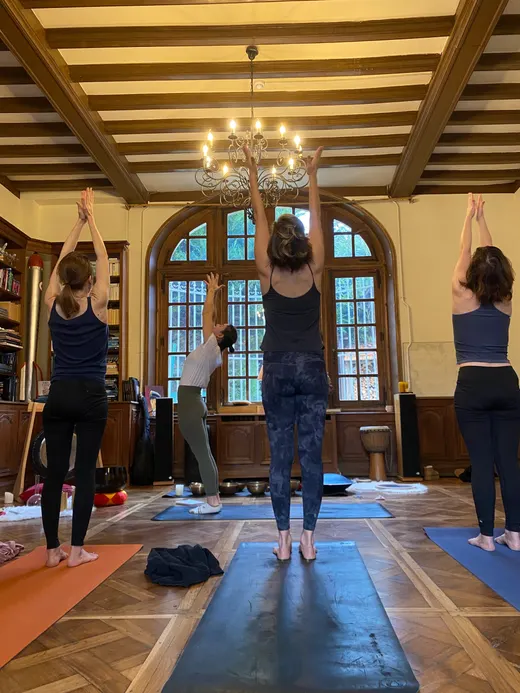
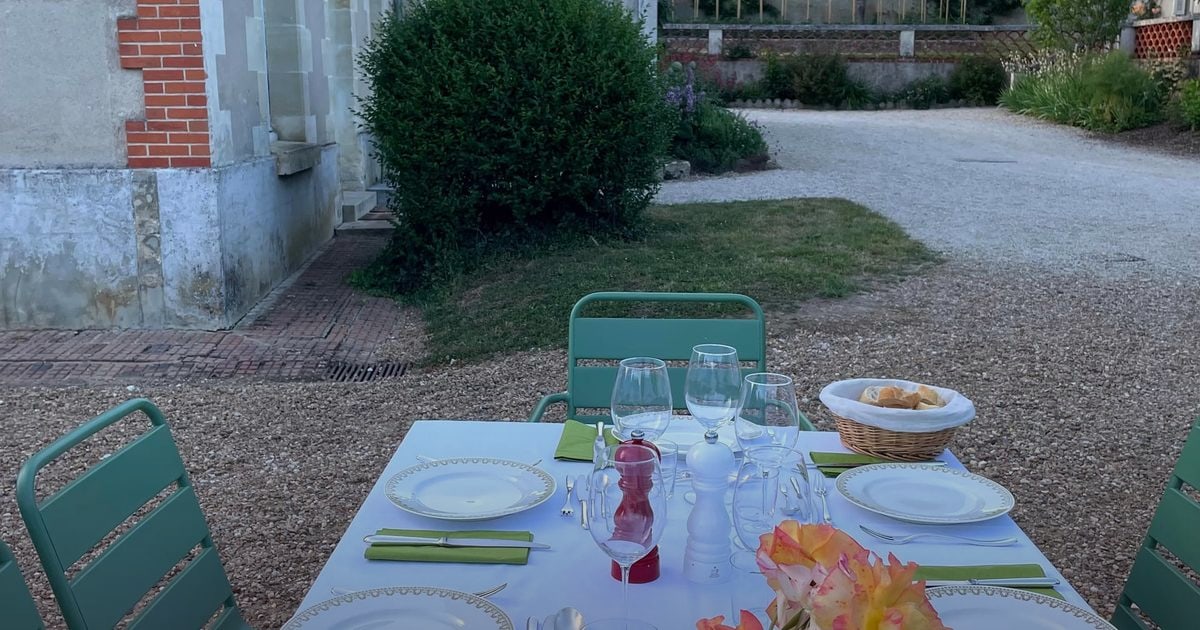
Once the fine weather arrives, the grounds become the studio: sunrise yoga facing the meadows, talking circles in the shade, slow walks across the fourteen hectares. You set the layout to suit your discipline, and we prepare the rooms accordingly, the day before and as the stay unfolds.
How are guests housed and fed?
Accommodation for a retreat group fits into ten suites, up to 20 guests housed, each with a private bathroom, in single or shared occupancy depending on the spirit of the stay. On a course, this logistics work makes the difference between smooth days and tiring ones.
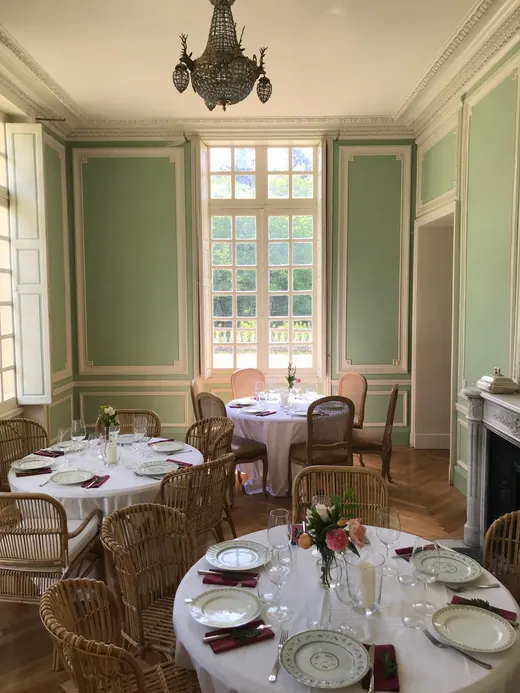
The table matters as much as the practice. I am Italian, and I prepare seasonal cooking from market and kitchen-garden produce, adaptable to vegetarian or gluten-free diets. The details of the table are on the dining page. Sleeping, practising and eating in the same place holds the rhythm of the course, from waking to the last session, with no car to get back into.
What does a retreat day at the château look like?
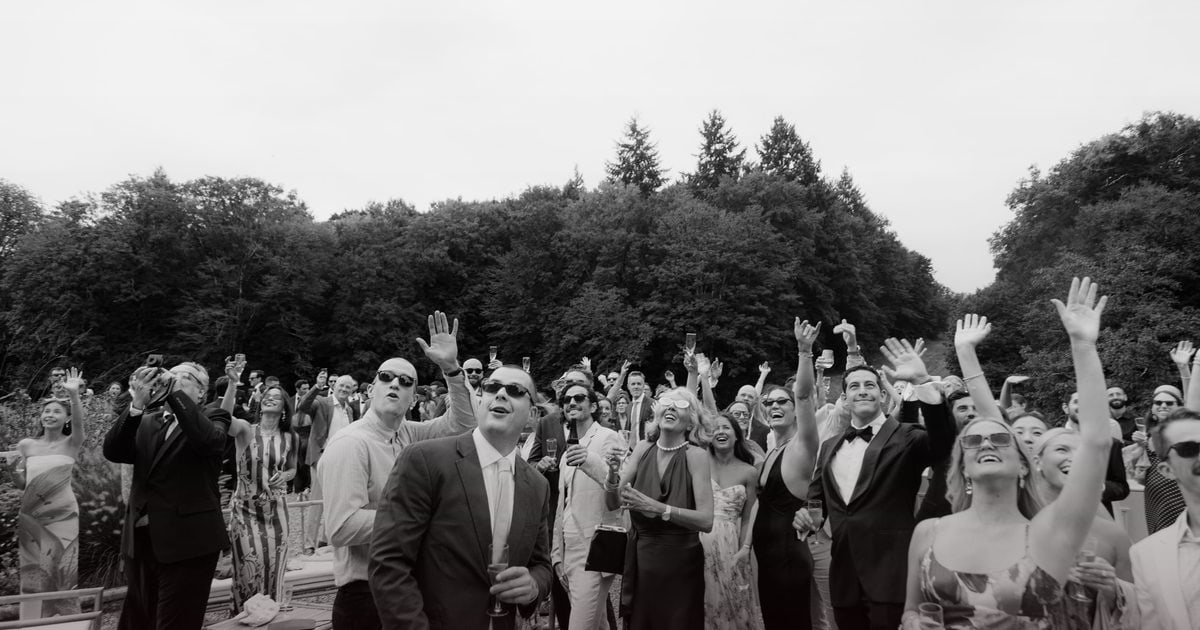
A retreat day at the château follows a simple rhythm, set by the light rather than the clock. Waking is gentle, a first practice opens the morning on an empty stomach, in the Orangery or outdoors depending on the season. Breakfast comes next, unhurried, around the big table.
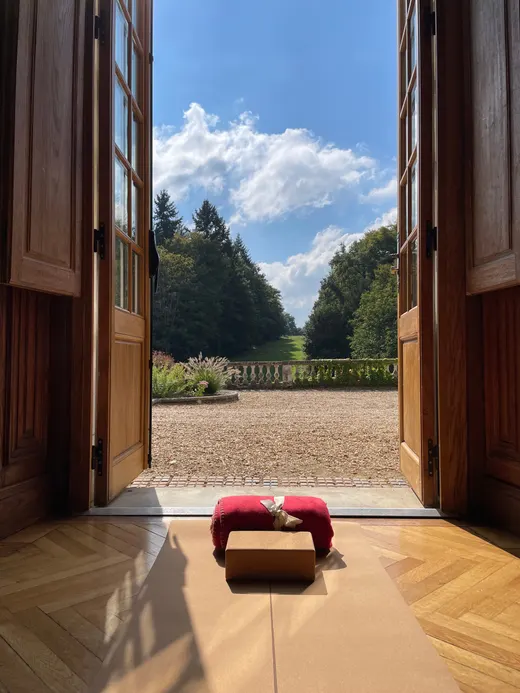
The morning keeps a second working slot, a workshop, a class or a sharing circle, before a light lunch that I adapt to your practice: vegetables from the kitchen garden, nothing heavy that would cut the afternoon short. Then comes free time, the thing groups ask for most. Some walk to the pond, others read, a few head to the 16-metre lap pool, heated from April to October.
The late afternoon often hosts the longest session, when the light drops and the estate falls quiet. Dinner closes the day, more generous, the moment when the group truly comes together. You set the timings, we arrange the meals and the rooms around them.
Beyond yoga: meditation, writing, personal development
Beyond yoga, the estate welcomes all gentle practices. Meditation and mindfulness find rare ground in this calm. Writing residencies and workshops make the most of the Orangery and the hushed sitting rooms. Personal development seminars, digital detox retreats and creative courses, whether painting, theatre or music master classes, all have their place here.
This versatility draws a varied set of organisers, and several return year after year. That is the best sign that a venue has found its place in a retreat calendar.
How do guests get to the château?
The accessibility of a retreat weighs on how well it fills: a venue that is too complicated to reach discourages sign-ups. The château is 2 hrs 20 from Paris by road, or one hour by high-speed train to Saint-Pierre-des-Corps then thirty minutes by car. Far enough for a change of scene, close enough to come without losing a day. We help organise arrivals and, if needed, shuttles from the station.
What format and length should a retreat have?
The format of a retreat is chosen according to your audience and your intention. The weekend, from Friday evening to Sunday, suits introductory retreats and groups travelling far for a few days: two nights, four to five sessions, a real break. The full week allows deeper work, with a teaching thread from Monday to Sunday and days that alternate practice, rest and nature.
Between the two, a long weekend of three nights is often the best compromise: long enough to settle into a rhythm, short enough to stay accessible. As for group size, ten to fifteen guests keep an intimate dynamic, up to twenty for a more intensive retreat. We adapt the accommodation, the meals and the rooms to each of these set-ups.
What should you check before booking a retreat venue?
Before booking a retreat venue, five points deserve a look. Exclusive use first: a group that shares the place with strangers loses the bubble that makes a retreat worthwhile. Here the estate is yours alone, gate included, for the whole course.
Accommodation next. Count the real number of beds and the bathroom ratio, a course is judged partly on how well people sleep. The château houses up to 20 guests across 10 suites, each with its own private bathroom. Third point, catering on site, which removes the travel and lets each meal be adjusted to the group's diets.
Look too at how adaptable the spaces are: a room that moves from yoga mats to workshop tables beats two fixed rooms. The 200 sqm Orangery and the four sitting rooms cover that need. The last point is access. A nearby high-speed train station and motorway push sign-ups up, a venue that is hard to reach drives guests away before the first class.
There remains the question of equipment, often overlooked at booking. We provide the technical logistics, sound, wifi and screens for the theory sessions. For mats and cushions, we talk it through beforehand: depending on the number of guests, it is sometimes better for each person to bring their own rather than weighing down the organiser's load. That kind of detail is settled at the first exchange, once the dates are set.
Planning your retreat
Planning your retreat means building the welcome around your programme: spaces, rooms, meals, schedules. Whether you are preparing a weekend or a week, you keep control of the content and we take care of the rest.
To check our availability and receive a proposal, visit the retreat page or write to us. We reply within 24 hours.