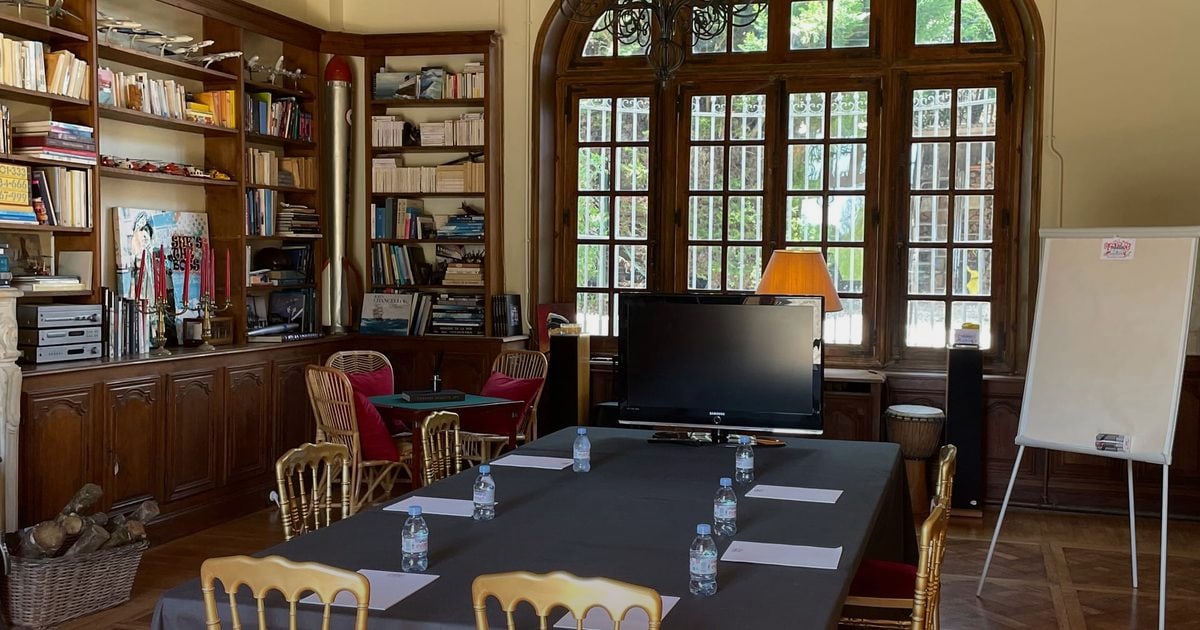
An executive retreat is not judged on how many rooms are available, but on what can actually be said inside them. A board settling a budget, a reorganisation or a three-year plan needs a closed venue, not a reserved floor in a conference hotel. At the Château de la Huberdière, the residential retreat takes place across an estate of 14 hectares held on an exclusive-use basis, near Amboise, 2 hrs 20 from Paris.
I host boards several times a year, and the briefs look alike: few participants, sensitive subjects, two days nobody wants to waste. Here is what this format really demands, and how we run it here.
What does an executive retreat ask for that a company seminar does not?
An executive retreat differs from a company seminar on three counts: the size of the group, the sensitivity of the subjects and the level of scrutiny on the details. Everything else follows from those.
A board meets as 8, 10, sometimes 14 people. That small headcount changes the logistics entirely. A plenary of 12 does not need a lecture theatre, it needs a table where everyone can see everyone else and nobody can hide behind a screen. The subjects, for their part, tolerate nothing approximate: a headcount decision or an acquisition is not discussed in a room whose partition wall is shared with another seminar.
The third point is the most underestimated. At this level, participants know good hotels well and spot anything false immediately: a lukewarm buffet, wifi that drops, service that interrupts a discussion at the wrong moment. The perceived quality of a board retreat rests on those details, not on the brochure. You will find the spaces and the packages set out on the page for hosting a corporate seminar at the château.
Exclusive use, the real condition for privacy
The only way to obtain genuine privacy is to take the whole venue, not one room inside a shared one. That is why we host a single group at a time.
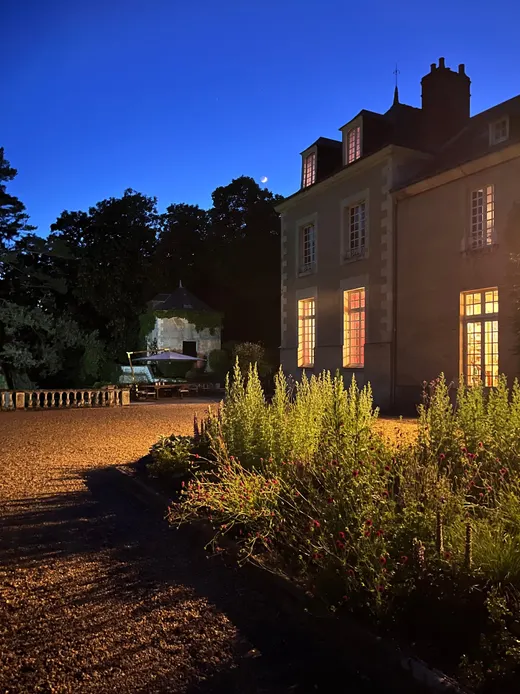
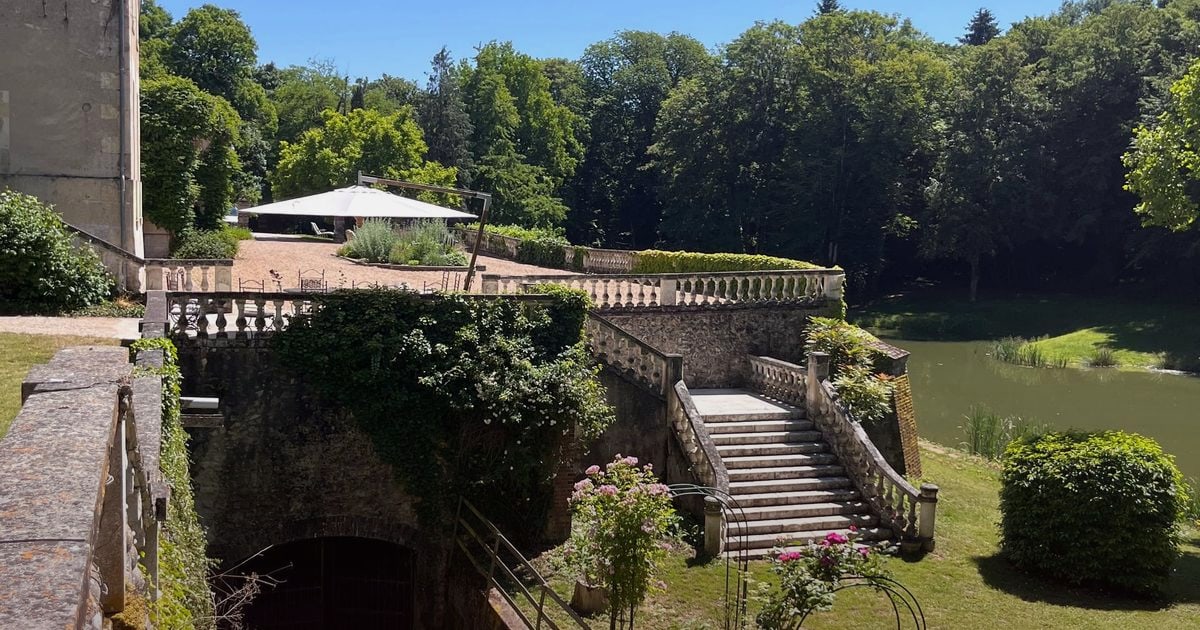
For the duration of your retreat, the château is yours: the 10 bedrooms, the drawing rooms, the Orangery, the 14 hectares of grounds. No other guests walk the corridors, nobody sits at the next table over dinner, and the park is walled, with no through traffic. In practice, a discussion can carry on out on the terrace or along a path without anyone lowering their voice. Directors notice that freedom within the first half day.
We also apply a few simple rules that nobody ever asks for and everybody appreciates. No company name on display, no printed programme left in the shared spaces, no service passing through during a session without a time agreed in advance. The team on duty is the household team, small and consistent, not a brigade of agency staff that changes every day. These are details; at this level, the details are the point.
How is a board accommodated on site?
The château has 10 bedrooms and sleeps 21, and we host up to 20 people on a residential basis, which means a board can have a single room each.
That is a tipping point in the decision, more so than it looks. A board member takes poorly to sharing a room, and a team of 10 finds 10 bedrooms here, each with its own bathroom. No two are alike, and that is deliberate: they differ in size, outlook and mood, as they do in a 16th-century family home rather than along a standardised hotel corridor.
Staying overnight changes the nature of the retreat. What is really said in a board meeting is rarely said at 11 in the morning in plenary, but often at 11 at night, once the official day is over and nobody has a train to catch. On site there is no car to get back into and no hotel to reach: the evening extends the work without appearing to. The same principle applies to taking the estate with friends or family, where sleeping under one roof makes all the difference.
Plenary, breakouts and quiet asides: the working spaces
An executive retreat moves between three formats over two days, and it needs all three kinds of space available at once, with no moving of furniture between sequences.
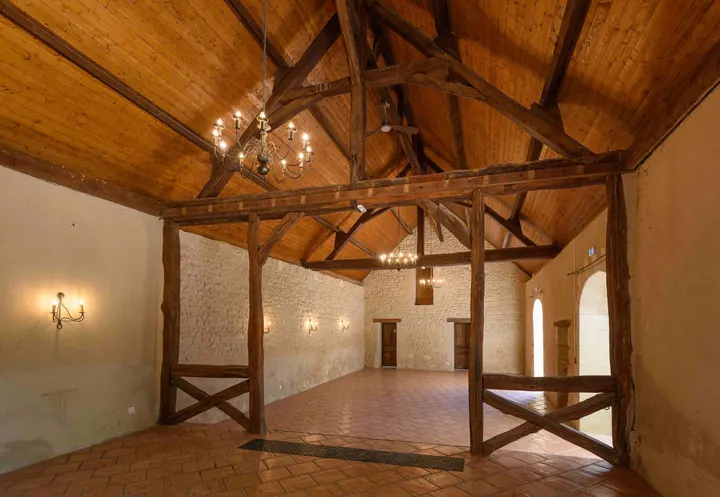
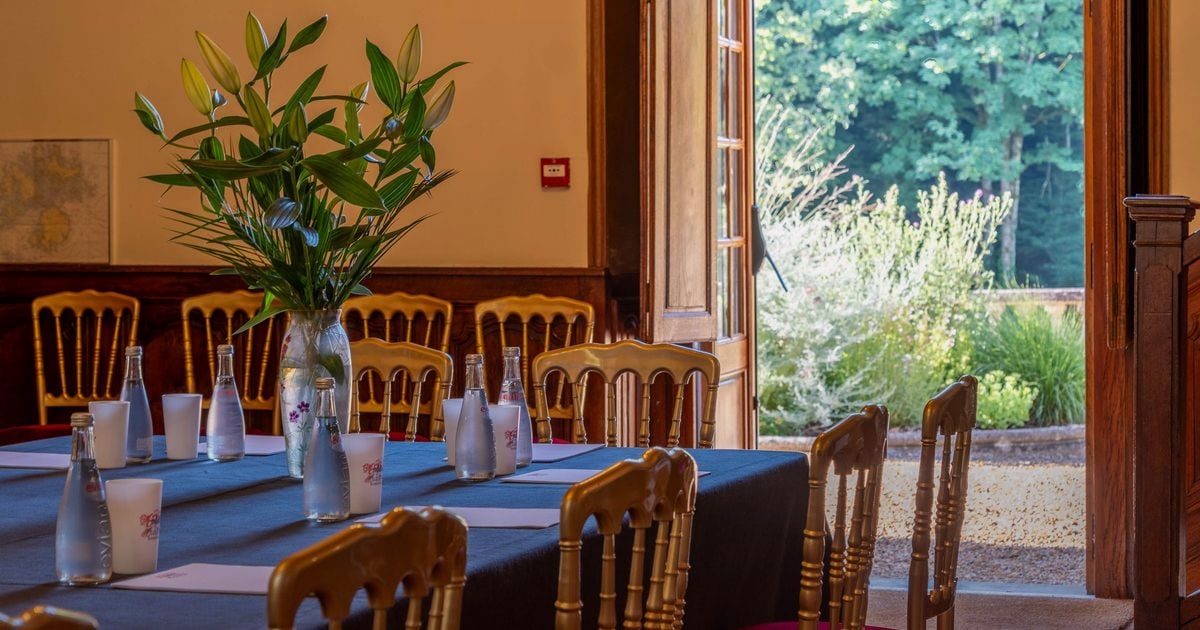
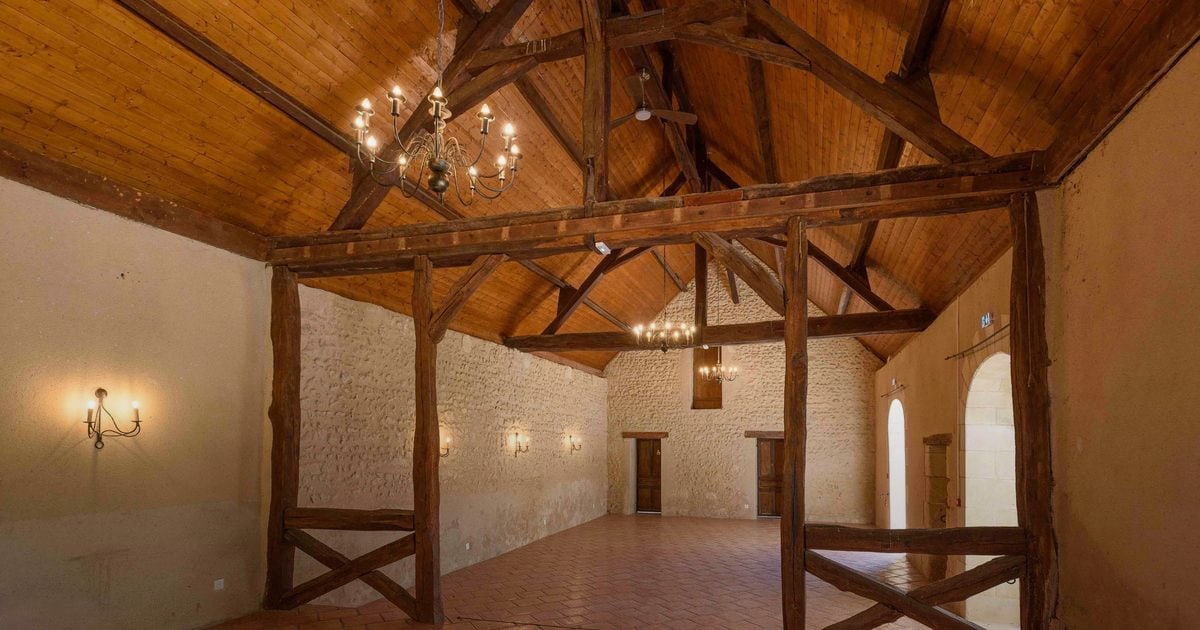
The 200 m² Orangery hosts the plenary, fitted with a projector and a flip chart, and can seat up to 100 people for wider formats such as a convention or a masterclass. For a board of 12 we usually prefer a tighter setting, in a U shape or around a single table, which suits decision-making better than rows facing a screen. The château's 4 drawing rooms then take over for the breakout groups, each in a closed room, with a fire lit in winter.
That leaves the format every floor plan forgets: the quiet aside. Two directors who need twenty minutes alone, a chair who wants a word with one of them before the session resumes. Here the grounds handle it, with their paths, kitchen garden and pond, and nobody needs to leave the estate or hunt for a quiet corner in a busy lobby. That is a real advantage of meeting in the countryside, and the grounds also take the outdoor team building activities we run here.
A 48-hour residential retreat, hour by hour
The format that works best for a board fits into two days and one night, with a single genuine physical break in the middle of the sequence.
Day 1. Arrival late morning, a light lunch on the terrace or in the dining room depending on the season. Plenary in the Orangery through the afternoon, two blocks of two hours with a break outdoors in between. At the end of the day, a real hour of air, a walk in the grounds or a swim in the lap pool, heated from April to October. Then dinner, and the evening that stretches out, the one where positions actually shift.
Day 2. A short session in the morning, the most productive of the whole retreat because the real subjects were laid out the night before. Breakout groups in the drawing rooms until lunch, a wrap-up before midday, departure in the early afternoon. A team that left Paris at 9 on the first day is home for dinner on the second.
Two mistakes come up often. Stacking sessions until 7 in the evening, which produces an exhausted board and soft decisions. And scheduling a pointless team-building activity: at this level, cohesion is built at the table, not on a treetop course. The full running order for a two-day seminar is set out in my article on organising a seminar at the château.
The table, the argument nobody expects
Catering decides whether an executive retreat succeeds more reliably than the meeting room does, because it is the one moment when everybody speaks freely.
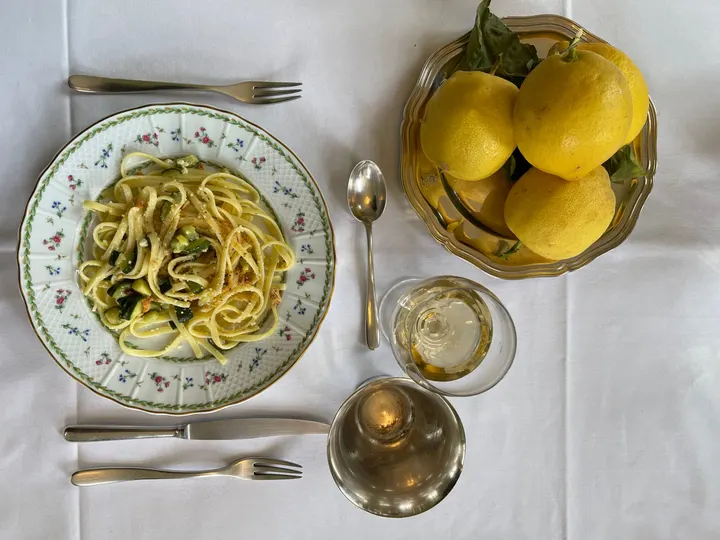
The kitchen at the château is Italian, and Lodovica runs it. No buffet kept warm under a lid, no cardboard lunch trays: seasonal produce, part of it from the kitchen garden, and dinner served at the table. On Thursday evenings the menu is entirely Italian, fresh pasta included. We accommodate diets and intolerances without making an issue of it, and we set the times around your programme, never the other way round. What we serve is set out on the page for dining at the château.
A light lunch on the first day is a working decision too. A board leaving the table at half past two after three courses will produce nothing all afternoon, and everyone knows it without daring to say so.
What budget for an executive retreat?
A residential seminar starts at 70 € excl. VAT per person depending on the package and the season, and the budget is driven mainly by length of stay, catering and activities.
Access weighs heavily in a board's decision, because travel time is directors' time. The estate is 2 hrs 20 by road from Paris, or an hour by TGV to Saint-Pierre-des-Corps and then 30 minutes by car, and we arrange the transfers from the station. Tours is 30 minutes away, Amboise a quarter of an hour.
On dates, the tight periods are September, October and January, the three classic windows for executive retreats. For an autumn board retreat, the sound practice is to block the dates three months ahead; winter and early spring can be booked much later, with the drawing rooms heated and the fires lit.
Tell me your dates, the number of participants and what you want out of those two days, and I will send you a running order and a proposal within 24 hours.